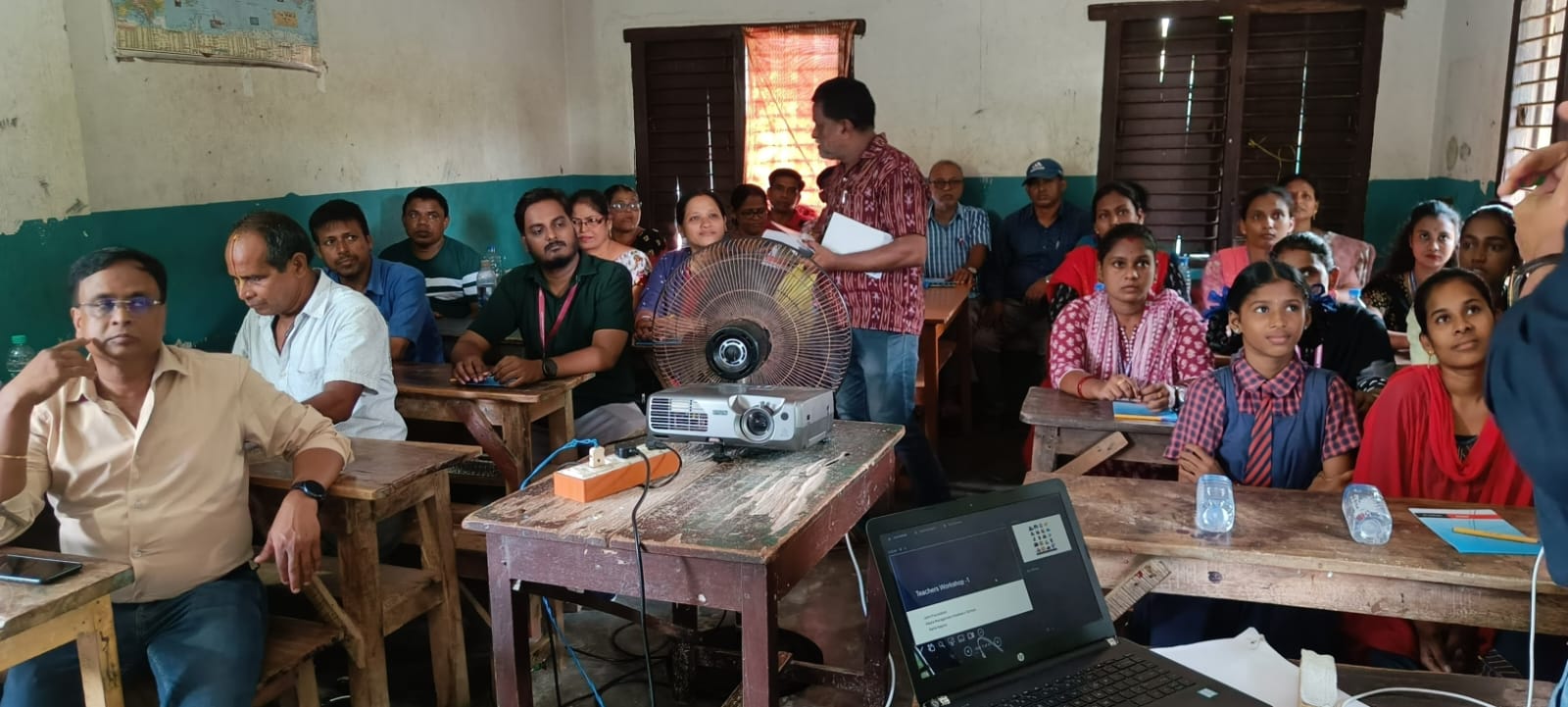
Usthi’s latest project is off to a strong start. At the end of September, the first workshop for teachers in the region took place as part of the waste management project in Penthakata. But what does waste management even mean? And what does it have to do with schools? These and many other questions were addressed during the first workshop with over 30 teachers in attendance.
The informal village of Penthakata on the outskirts of Puri has grown significantly over the past decades. With the village’s expansion, the amount of daily waste has also increased. The current disposal system in the settlement is inadequate, and the waste has become a health risk for the population.
Given this situation, Usthi, in collaboration with EAWAG, the Swiss Federal Institute of Aquatic Research and Technology, launched a project to sustainably improve waste management in the Penthakata village. A needs assessment among the population showed a strong demand for effective waste management, but there is a lack of infrastructure and knowledge on the topic.
Much More Than Just New Waste Disposal Containers
The best infrastructure is useless if it isn’t used. Alongside the development of new disposal infrastructure, waste management is also being integrated into school curricula to educate the next generation on waste-related issues. Teachers can impart essential knowledge about environmental damage caused by uncontrolled waste and discuss future-oriented topics, like the link between waste and health, with their students.
Kartik Kapoor, an Indian waste management expert, laid the foundation for this effort by introducing over 30 teachers from Penthakata to the basics of waste management. Starting with the question, “What is waste?” and moving through the concept of the 3-R rule—Reduce, Reuse, Recycle—the teachers gained valuable insights. Special emphasis was placed on the impact of uncontrolled waste disposal on hygiene and health.
«It is great to see that all the schools in Penthakata are participating in the next phases of the project!» said Kurt Bürki, co-founder of the Usthi Foundation, who attended the first workshop. «By raising awareness in the next generation, waste management can be sustainably improved.»